
Car Maintenance Tasks You Can Safely Do Yourself (and Ones You Shouldn't)

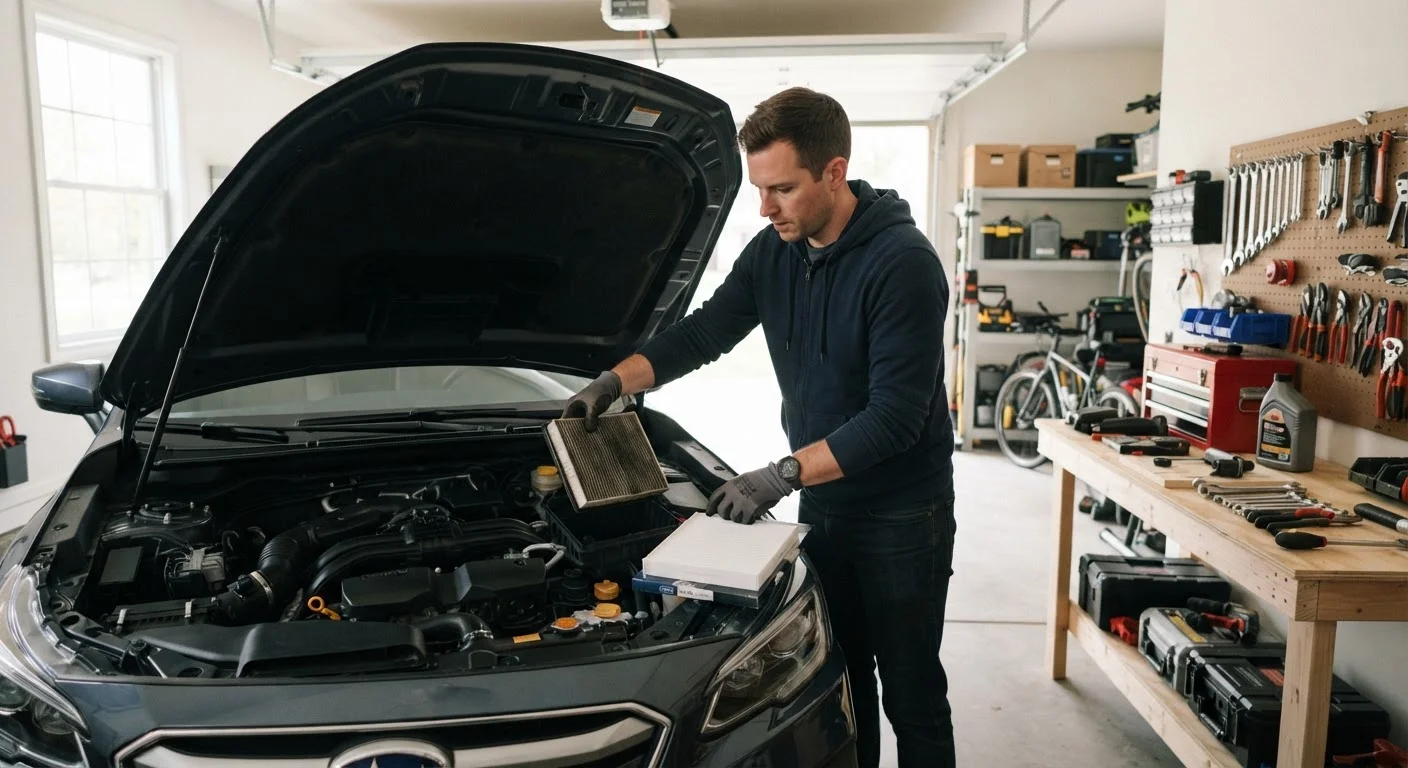
Photo: everyday-trends.com editorial
Key Takeaways
- Several routine tasks, including air filter and wiper blade replacement, are safe for most owners to do at home.
- Jobs involving brakes, suspension, or fuel systems carry real injury and vehicle-damage risk if done incorrectly.
- DIY maintenance saves money on labor but requires the right tools, a clean workspace, and honest skill assessment.
- A licensed mechanic should handle any task where an error could compromise steering, braking, or structural integrity.
- Keeping records of self-performed maintenance protects resale value and helps mechanics diagnose issues accurately.
Real labor cost savings on routine tasks
Air filter replacements, wiper blades, and battery maintenance cost a fraction of shop prices when done at home, since parts are the only expense.
Tasks can be done on your own schedule
Home maintenance does not require an appointment or waiting room time, which reduces the friction that leads families to defer simple upkeep.
Builds familiarity with your vehicle
Owners who perform basic maintenance learn what normal looks like under the hood, which makes it easier to notice something unusual before it becomes a large repair.
Reduces likelihood of unnecessary upsells
When an owner already knows the cabin filter or wipers were just replaced, they are less likely to pay for a service they do not yet need.
Errors on safety systems can be dangerous
Mistakes on brakes, steering, or suspension do not always produce an obvious warning. The failure mode can appear suddenly at highway speed.
Upfront tool costs reduce savings on first jobs
A torque wrench, socket set, and oil drain pan represent real upfront spending that may not be recovered until multiple services are completed.
Modern vehicles have fewer accessible components
Many newer models require dealer-specific scan tools to reset service reminders or program replacement parts, making some jobs impractical without shop equipment.
Incorrect work can void warranty coverage
Using the wrong fluid grade, improper torque specifications, or non-approved parts may give a manufacturer grounds to deny a warranty claim on related components.
What DIY maintenance actually saves
Labor accounts for a large portion of most routine service bills. A shop charging $120 for an oil change may be spending $20 on materials and $100 on labor. When the task is simple enough that an owner can complete it correctly in under an hour, doing it yourself cuts that bill significantly. Over a year of regular upkeep on one vehicle, the savings can run into the hundreds of dollars.
The catch is that savings only materialize when the job is done correctly. An improperly reinstalled drain plug, for example, can destroy an engine in a single drive. So the practical question is not just "can I do this?" but "can I do this without a realistic chance of error?"
See also: why deferred oil changes quietly inflate repair bills.
Real labor cost savings on routine tasks
Air filter replacements, wiper blades, and battery maintenance cost a fraction of shop prices when done at home, since parts are the only expense.
Tasks can be done on your own schedule
Home maintenance does not require an appointment or waiting room time, which reduces the friction that leads families to defer simple upkeep.
Builds familiarity with your vehicle
Owners who perform basic maintenance learn what normal looks like under the hood, which makes it easier to notice something unusual before it becomes a large repair.
Reduces likelihood of unnecessary upsells
When an owner already knows the cabin filter or wipers were just replaced, they are less likely to pay for a service they do not yet need.
Tasks most owners can handle at home
The following jobs share a common profile: they involve accessible components, require basic tools, and have a limited consequence if a step is missed during a do-over.
- Engine air filter: Usually located in a plastic housing under the hood, secured by clips or a few screws. Replacement takes under 10 minutes and requires no tools in many vehicles.
- Cabin air filter: Typically behind the glove box or under the dashboard. Most owner manuals include the location and removal steps.
- Wiper blades: Blade kits include adapter clips for common arm types. The packaging usually shows a step-by-step diagram.
- Tire inflation: Checking and correcting pressure with a gauge and a portable compressor is low-risk and saves fuel. Proper inflation habits also reduce uneven tread wear.
- Battery terminal cleaning: Disconnecting terminals and removing corrosion with a wire brush and baking soda solution is manageable. Always disconnect the negative terminal first and reconnect it last.
- Light bulbs: Many exterior bulbs are accessible without removing body panels. Check the owner manual first, since some modern headlight assemblies require professional handling.
Check your owner manual first
Tasks that should stay with a professional
Some jobs look approachable in online tutorials but carry enough risk that an error could injure someone or cause expensive secondary damage. This is not about skill gatekeeping; it is about consequences.
Errors on safety systems can be dangerous
Mistakes on brakes, steering, or suspension do not always produce an obvious warning. The failure mode can appear suddenly at highway speed.
Upfront tool costs reduce savings on first jobs
A torque wrench, socket set, and oil drain pan represent real upfront spending that may not be recovered until multiple services are completed.
Modern vehicles have fewer accessible components
Many newer models require dealer-specific scan tools to reset service reminders or program replacement parts, making some jobs impractical without shop equipment.
Incorrect work can void warranty coverage
Using the wrong fluid grade, improper torque specifications, or non-approved parts may give a manufacturer grounds to deny a warranty claim on related components.
Brake work is the most cited example. A caliper that is not seated correctly, or brake fluid introduced with air in the line, can reduce stopping power in ways that are not obvious until a hard-braking event. Similarly, suspension components handle alignment geometry: an incorrectly torqued ball joint or tie rod end can cause sudden, unpredictable handling loss.
Fuel system work introduces fire and vapor hazards. Timing and serpentine belt replacement on interference engines carries severe engine damage risk if the belt slips during installation. These are jobs where the cost of a mechanic is small compared to the cost of getting it wrong.
The same logic that applies to knowing when to call a licensed contractor for a home project applies here: some jobs legally and practically require professional involvement.
Keeping good records matters
Whether the work is done at home or at a shop, written records protect resale value and help future mechanics. A notebook or free app that logs the date, mileage, and part used for each job is enough. Some buyers and certified pre-owned programs ask for maintenance documentation, and a clear record carries weight.
Accurate records also prevent over-servicing. If you replace a cabin filter on your own schedule and have the receipt, a service advisor cannot convince you it needs replacing again three months later.
This article is for general informational purposes only. Vehicle designs vary, and some procedures that are straightforward on one model may require special tools or professional handling on another. Always consult your vehicle owner manual and, where safety-critical systems are involved, have the work performed or inspected by a licensed mechanic.
The content provided on our blog site traverses numerous categories, offering readers valuable and practical information. Readers can use the editorial team’s research and data to gain more insights into their topics of interest. However, they are requested not to treat the articles as conclusive. The website team cannot be held responsible for differences in data or inaccuracies found across other platforms. Please also note that the site might also miss out on various schemes and offers available that the readers may find more beneficial than the ones we cover.