
Hiring a Handyman vs. a Licensed Contractor: When Each Makes Sense

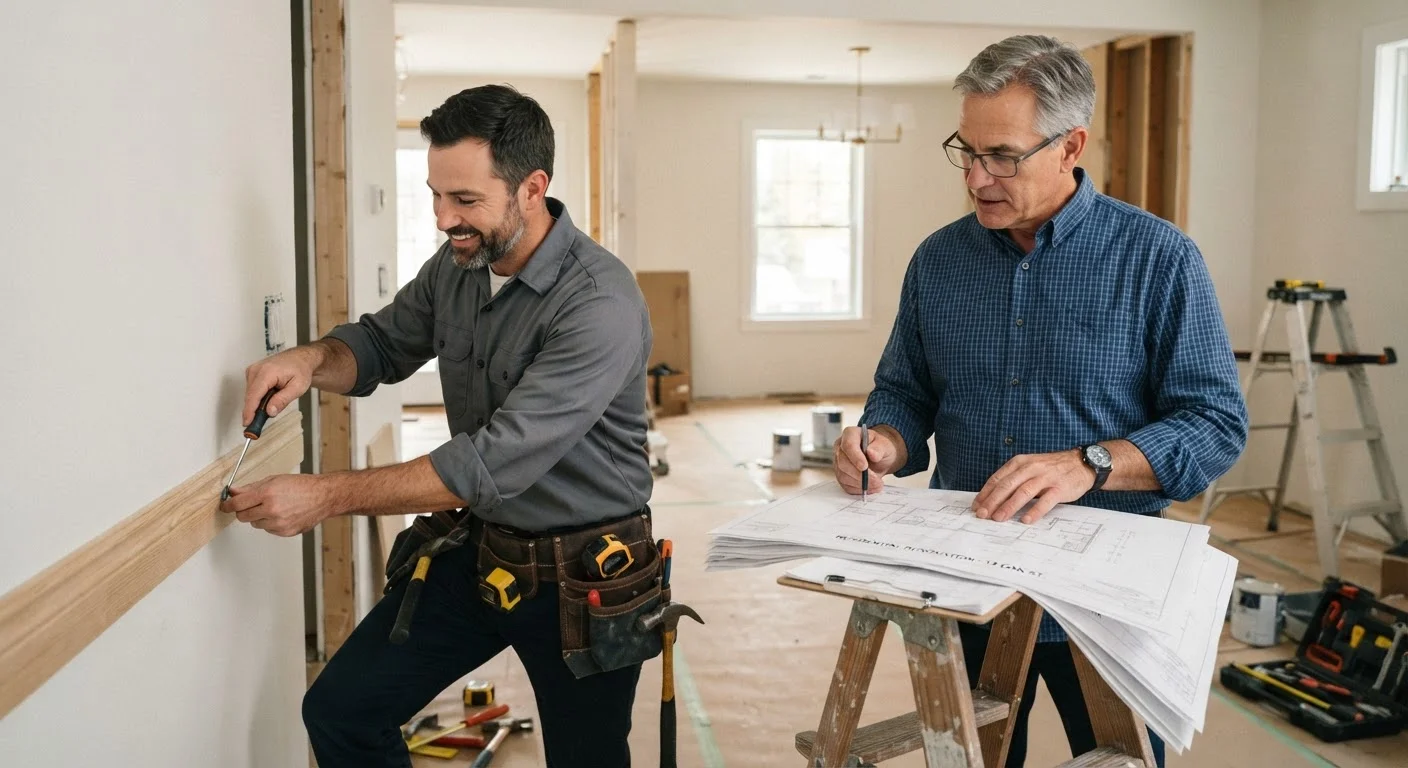
Photo: everyday-trends.com editorial
Key Takeaways
- Handymen are suited for minor repairs and maintenance tasks that do not require permits or licensed work.
- Licensed contractors are legally required for electrical, plumbing, structural, and other regulated work in most states.
- Hiring the wrong type of professional can void homeowner's insurance or create code violations.
- Cost is not the only factor; scope, safety, and local permit requirements all matter.
- Always verify licensing and insurance before any professional begins work on your home.
What separates a handyman from a licensed contractor
The terms are often used loosely, but they describe different levels of training, legal authority, and accountability. A handyman is a general repair person who handles a wide range of small tasks. Licensing requirements for handymen vary widely by state and municipality: some states require a basic registration or limit the dollar value of jobs a handyman may accept, while others impose no formal requirements at all.
A licensed contractor has passed state-administered exams, met experience thresholds, and carries the insurance and bonding that state law requires. Specialty contractors, such as electricians and plumbers, hold trade-specific licenses that authorize them to perform regulated work and pull the permits that inspectors then verify. For plain-language definitions of the repair vocabulary these professionals use, see our home maintenance terms reference guide.
Tasks that are reasonable for a handyman
A capable handyman can handle many of the small, recurring jobs that come with owning a home. Common examples include:
- Patching drywall and touching up paint
- Replacing interior doors, locksets, and cabinet hardware
- Caulking around windows, tubs, and sinks
- Fixing squeaky floors or minor wood rot on trim
- Installing ceiling fans where wiring already exists and no new circuit is needed
- Assembling furniture and mounting shelves or TVs
These tasks generally do not require permits, do not touch regulated systems, and carry limited safety risk when done correctly. The practical ceiling for handyman work is usually a combination of job complexity and total cost: many states set a threshold (often between $500 and $1,000 in labor and materials) above which a general contractor license is required. Check your local rules before hiring.
Ask about job value limits before hiring
When a licensed contractor is required
Certain categories of work are regulated because errors carry serious consequences: fire, flooding, structural failure, or electrocution. In most states, the following work legally requires a licensed professional and, in many cases, a permit and inspection:
- Any new electrical circuits, panel upgrades, or work on the main service
- Plumbing that connects to the municipal supply or sewer line
- Structural work including load-bearing wall removal, foundation repair, or additions
- HVAC installation or replacement
- Roofing work that involves structural decking (rules vary; always verify locally)
- Any project that requires a building permit in your jurisdiction
Unpermitted work on regulated systems can create serious problems when you sell the home, file an insurance claim, or need a future inspection. Insurers can deny claims if they determine that work was done without required permits or by an unlicensed person.
Unpermitted work can affect insurance and resale
How to evaluate either type of professional
Whether you hire a handyman or a licensed contractor, a few verification steps apply in both cases. Ask to see proof of liability insurance and, where applicable, a current license number that you can check against your state contractor licensing board's public database. For licensed trades, confirm the license covers the specific work being done: a general contractor license does not automatically authorize electrical or plumbing work.
Get the scope of work in writing before any project starts. For larger jobs, a written contract that specifies materials, timeline, and payment schedule gives you clear recourse if something goes wrong. The same disciplined approach applies to evaluating DIY versus professional help in other areas of home maintenance; the logic is similar to deciding which car maintenance tasks are genuinely DIY-friendly versus which ones carry enough risk to warrant a professional.
Comparing costs and tradeoffs
Handymen typically charge lower hourly rates than licensed contractors, which makes them cost-effective for straightforward jobs. Licensed contractors carry higher overhead: license fees, bonding, insurance, and permit costs are built into their pricing. That overhead exists for good reason, and on regulated projects it is not optional.
Attempting to save money by using an unlicensed worker for work that requires a permit can result in fines, required demolition of completed work, or difficulty refinancing or selling the property. The short-term savings rarely outweigh those risks.
| Handyman | Licensed contractor | |
|---|---|---|
| Typical tasks | Minor repairs, cosmetic fixes | Electrical, plumbing, structural work |
| Permits required | Rarely | Often required by law |
| State licensing | Varies; often minimal | Required; trade-specific |
| Insurance and bonding | Verify individually | Required by state law |
| Typical cost | Lower hourly rate | Higher rate; includes overhead |
| Legal risk if used incorrectly | Code violations possible | N/A when correctly matched |
The content provided on our blog site traverses numerous categories, offering readers valuable and practical information. Readers can use the editorial team’s research and data to gain more insights into their topics of interest. However, they are requested not to treat the articles as conclusive. The website team cannot be held responsible for differences in data or inaccuracies found across other platforms. Please also note that the site might also miss out on various schemes and offers available that the readers may find more beneficial than the ones we cover.