
Tire Care Habits That Keep a Family Vehicle Safer and Running Longer

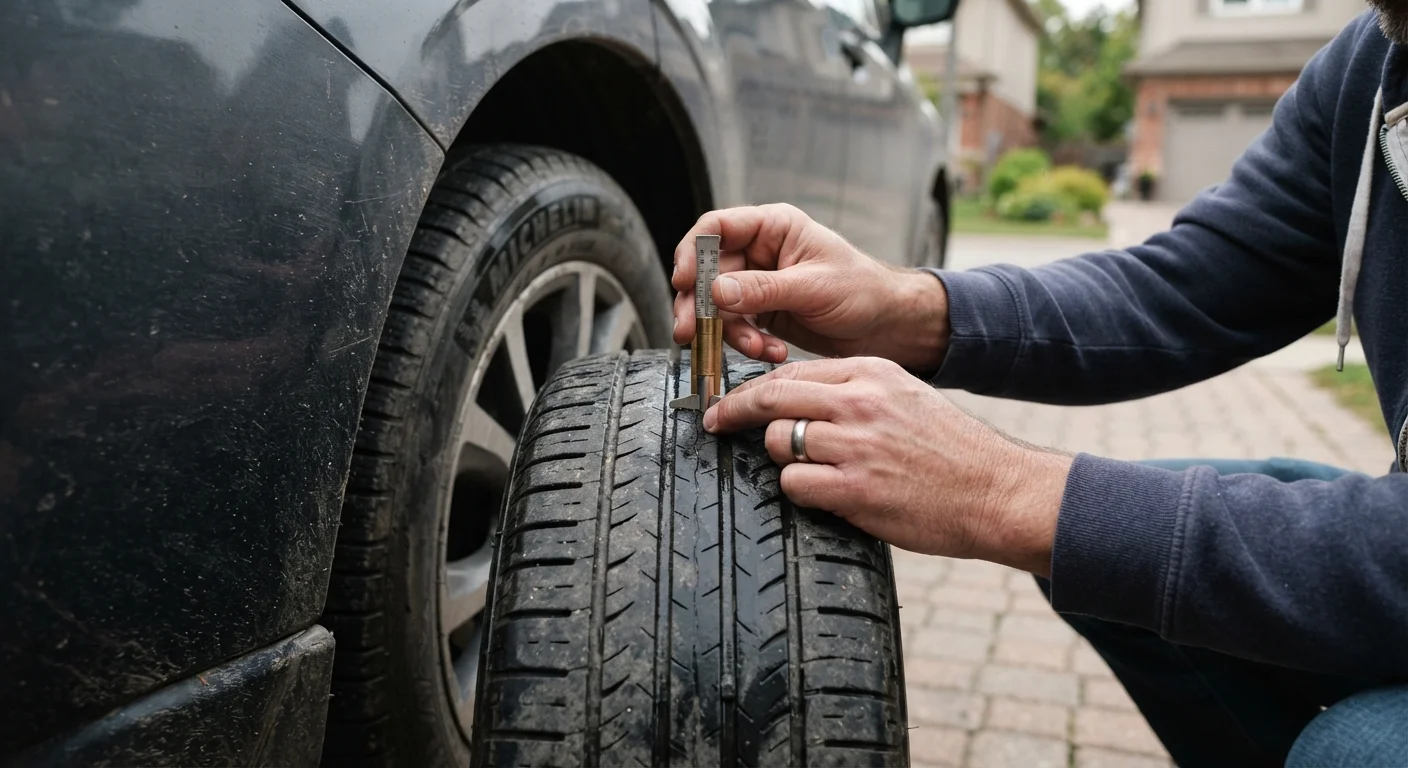
Photo: everyday-trends.com editorial
Key Takeaways
- Keeping tires at the manufacturer's recommended pressure reduces uneven wear and supports fuel efficiency.
- Rotating tires every 5,000 to 7,500 miles distributes tread wear more evenly across all four positions.
- Tread depth below 2/32 of an inch is the legal minimum in most US states, but 4/32 is a safer practical threshold.
- Wheel alignment and balancing problems can cause rapid, uneven tire wear that shortens tire life significantly.
- Inspecting tires monthly for cuts, bulges, and embedded objects catches damage before it becomes a road hazard.
Why tire maintenance matters for family budgets
A set of four replacement tires can cost several hundred to over a thousand dollars installed, depending on the vehicle. That is a significant hit for any family budget. Consistent tire care extends the usable life of each tire and reduces the chance of a sudden, expensive failure. It also supports predictable handling and braking, which matters when a vehicle is carrying children.
Tire neglect shows up in two ways: premature replacement and avoidable repairs. Both are preventable with habits that take less than 15 minutes a month. See our guide to DIY car maintenance for a broader look at which checks a driver can safely handle without a mechanic.
Tire pressure: the habit with the highest return
Tires lose roughly 1 PSI (pound per square inch) per month under normal conditions, and they lose an additional 1 PSI for every 10-degree Fahrenheit drop in outside temperature. A tire that starts the winter at the correct pressure can be noticeably underinflated by February without the driver ever noticing a change in ride feel.
The correct inflation figure is printed on a sticker inside the driver-side door jamb, not on the tire sidewall. The sidewall number is the tire's maximum rated pressure, which is different. Checking pressure monthly with an inexpensive gauge and adjusting as needed is one of the simplest ways to avoid uneven wear on the inner or outer edges of the tread.
Overinflation causes the center of the tread to wear faster and reduces the tire's contact patch, which can affect wet-road braking. Underinflation generates excess heat and stresses the sidewall. Both conditions shorten tire life and can affect fuel consumption. Properly inflated tires support better fuel economy, which compounds savings over time. For more on that relationship, see our article on factors that affect fuel economy.
Rotation, alignment, and balancing
Tires on the front axle of a front-wheel-drive vehicle wear faster than rear tires because they handle both steering and power delivery. Rotating tires moves each tire to a different position on the vehicle so wear spreads more evenly across all four. Most vehicle manufacturers recommend rotation every 5,000 to 7,500 miles, often aligned with oil change intervals. Check the owner's manual for the specific pattern and interval for your vehicle.
Wheel alignment is a separate service. Misaligned wheels pull the vehicle to one side and cause one edge of a tire to wear much faster than the other. A vehicle that drifts on a straight, level road or has a steering wheel that sits off-center may have an alignment issue. Hitting a curb or pothole hard enough can knock alignment out of spec.
Balancing addresses weight distribution around the wheel and tire assembly. An out-of-balance wheel vibrates at highway speeds, wearing tires unevenly and creating driver fatigue. Balancing is typically done when new tires are installed and should be rechecked if vibration appears later.
Reading tread wear and spotting damage
Federal law sets 2/32 of an inch as the minimum legal tread depth in most states. Many road safety organizations suggest replacing tires at 4/32 of an inch because wet stopping distances increase noticeably below that threshold. A quarter inserted into a tread groove with Washington's head pointing down and the top of his head still visible indicates roughly 4/32 remaining. A penny used the same way measures approximately 2/32.
Uneven tread wear patterns reveal maintenance problems. Center wear points to chronic overinflation. Edge wear on both shoulders suggests chronic underinflation. Wear on one edge only usually indicates an alignment problem. Cupping or scalloping, where the tread appears to dip in patches, often points to worn shock absorbers or struts.
Monthly visual inspections should also check for cuts or punctures in the tread, cracks or bulges in the sidewall, and any object embedded in the rubber. A bulge in the sidewall indicates internal damage and means the tire should be evaluated by a qualified technician before the vehicle is driven further at highway speeds. Do not attempt to repair sidewall damage yourself; this is a task for a professional tire shop.
This article provides general information about tire maintenance and is not a substitute for guidance from a qualified mechanic. Always consult a licensed professional for repairs or if you are uncertain about the condition of your tires.
The content provided on our blog site traverses numerous categories, offering readers valuable and practical information. Readers can use the editorial team’s research and data to gain more insights into their topics of interest. However, they are requested not to treat the articles as conclusive. The website team cannot be held responsible for differences in data or inaccuracies found across other platforms. Please also note that the site might also miss out on various schemes and offers available that the readers may find more beneficial than the ones we cover.