
Common Home Maintenance Terms Every Homeowner Should Recognize

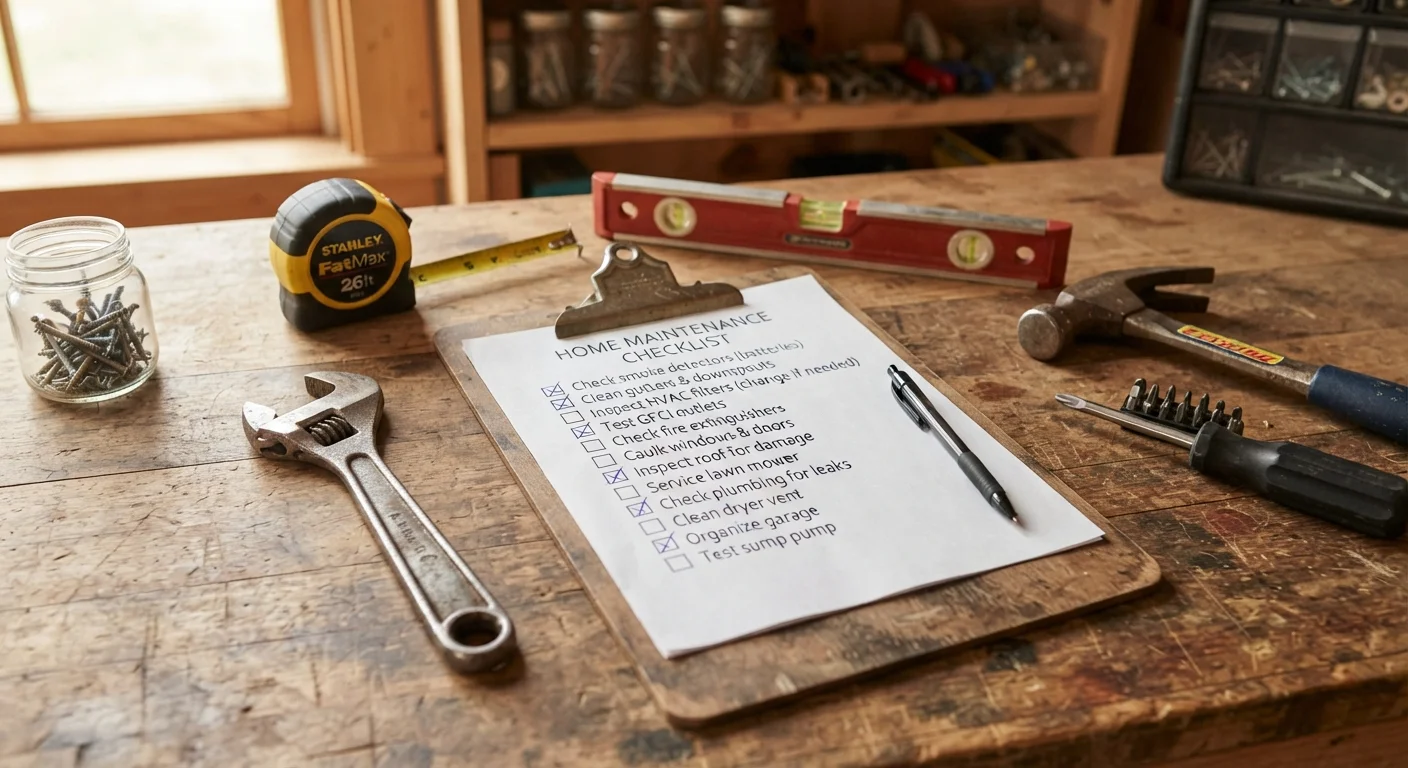
Photo: everyday-trends.com editorial
Why this vocabulary matters
When a contractor mentions "flashing" or a home inspector flags a "soffit problem," many homeowners nod along without a clear picture of what those words mean. That gap can cost money. Misunderstandings lead to scope creep, unexpected charges, or repairs that address the wrong problem entirely.
This reference covers the terms you are most likely to hear during inspections, repair estimates, and routine maintenance calls. The goal is to give you enough working knowledge to ask the right questions, not to replace professional advice.
For decisions involving licensed work, see our guide on when to hire a handyman versus a licensed contractor.
Flashing
Thin metal strips installed at roof joints and transitions to prevent water infiltration. Common materials include aluminum and galvanized steel.
Soffit
The material covering the underside of a roof overhang. Vented soffits allow airflow into the attic to control moisture and temperature.
AFCI breaker
An arc-fault circuit interrupter: a breaker that detects hazardous electrical arcing and shuts off power to prevent fires. Many local codes require these in living spaces.
GFCI outlet
A ground-fault circuit interrupter outlet that cuts power in milliseconds when it detects a ground fault. Required near water sources by most building codes.
R-value
A measure of thermal resistance in insulation materials. A higher R-value indicates greater resistance to heat transfer through a wall or ceiling.
Grade
The slope of soil around a home's foundation. Positive grade directs water away from the house; negative grade allows water to collect near the foundation.
Heat exchanger
A furnace component that keeps combustion gases separated from circulated indoor air. A crack in this part can allow carbon monoxide to enter living spaces.
Rough-in
The early phase of plumbing, electrical, or HVAC installation completed before walls are closed. Rough-in work typically requires a code inspection before being covered.
Exterior terms
The exterior of a house has its own vocabulary, and most of it comes up whenever roofing, siding, or drainage work is discussed.
Roofing and water management
Flashing is thin metal (usually aluminum or galvanized steel) installed at joints where two roof surfaces meet, or where the roof meets a wall, chimney, or vent. Its job is to direct water away from seams that shingles alone cannot seal. Deteriorating flashing is one of the more common sources of interior water damage.
Fascia is the horizontal board running along the lower edge of the roofline. It supports the bottom row of roof tiles and is the surface to which gutters are attached. Rotting fascia often signals a long-standing drainage problem.
Soffit is the material that encloses the underside of the roof overhang between the fascia and the exterior wall. Most soffits have vents that allow airflow into the attic, which helps regulate temperature and moisture.
Downspout is the vertical pipe that carries water from a gutter down to ground level. Extensions direct water away from the foundation. Blocked or missing downspouts are a frequent cause of basement moisture.
Foundation and drainage
Grade refers to the slope of the ground around a home's foundation. Positive grade slopes away from the house; negative grade slopes toward it and can funnel rainwater into a basement or crawl space.
Weep screed is a small gap or channel at the base of stucco or siding that allows any moisture trapped behind the cladding to drain out rather than collect.
Interior and mechanical terms
Interior systems, especially electrical and HVAC, come with precise vocabulary that affects both safety and cost estimates.
Electrical
AFCI breaker (arc-fault circuit interrupter) is a circuit breaker that detects dangerous electrical arcing, a common cause of house fires, and shuts the circuit down. Many building codes now require AFCI breakers in bedrooms and living areas. Because this involves the electrical panel, installation should be handled by a licensed electrician.
GFCI outlet (ground-fault circuit interrupter) is an outlet with a built-in sensor that cuts power within milliseconds if it detects current flowing through an unintended path, such as through a person. Required by code near water sources: kitchens, bathrooms, garages, and outdoor areas.
HVAC
Air handler is the indoor unit of a split HVAC system. It contains the blower, coil, and filter, and circulates conditioned air through the ductwork. The outdoor unit is the compressor or condenser.
Heat exchanger is the component inside a furnace that separates combustion gases from the air circulated into living spaces. A cracked heat exchanger can allow carbon monoxide to enter the home and warrants immediate professional inspection.
R-value measures thermal resistance in insulation. Higher R-values mean more resistance to heat flow. The recommended R-value for attic insulation varies by climate zone; the U.S. Department of Energy publishes regional guidelines.
| GFCI outlets required near | Kitchens, bathrooms, garages, outdoor areas (U.S. National Electrical Code (NEC)) |
| Flashing material | Aluminum or galvanized steel |
| R-value guidelines published by | U.S. Department of Energy (energy.gov, climate zone maps) |
| T&M billing means | Pay actual hours plus material cost |
| Positive grade slope direction | Away from the foundation |
Reading a repair estimate
Estimates often include terms that blur the line between labor and materials. A few common ones:
- Rough-in refers to the initial phase of plumbing, electrical, or HVAC work completed before walls are closed. A rough-in inspection checks that hidden work meets code before drywall covers it.
- Punch list is a final checklist of small tasks remaining at the end of a project. Completing the punch list is typically tied to the final payment.
- T&M stands for time and materials, a billing method where you pay for actual hours worked plus the cost of materials. Compare this to a fixed-bid contract, where the price is set regardless of how long the work takes.
Understanding how a project is billed helps you evaluate whether an estimate is reasonable before work begins. For a broader look at categorizing home repair costs in your household budget, see our reference on fixed, variable, and discretionary expenses.
This article is for informational purposes only. Home repair and maintenance work may require permits, licensed contractors, or professional inspections depending on your local codes. Always verify requirements with your local building authority before beginning any regulated work.
The content provided on our blog site traverses numerous categories, offering readers valuable and practical information. Readers can use the editorial team’s research and data to gain more insights into their topics of interest. However, they are requested not to treat the articles as conclusive. The website team cannot be held responsible for differences in data or inaccuracies found across other platforms. Please also note that the site might also miss out on various schemes and offers available that the readers may find more beneficial than the ones we cover.