
Composting at Home: Separating Common Myths from What the Science Says

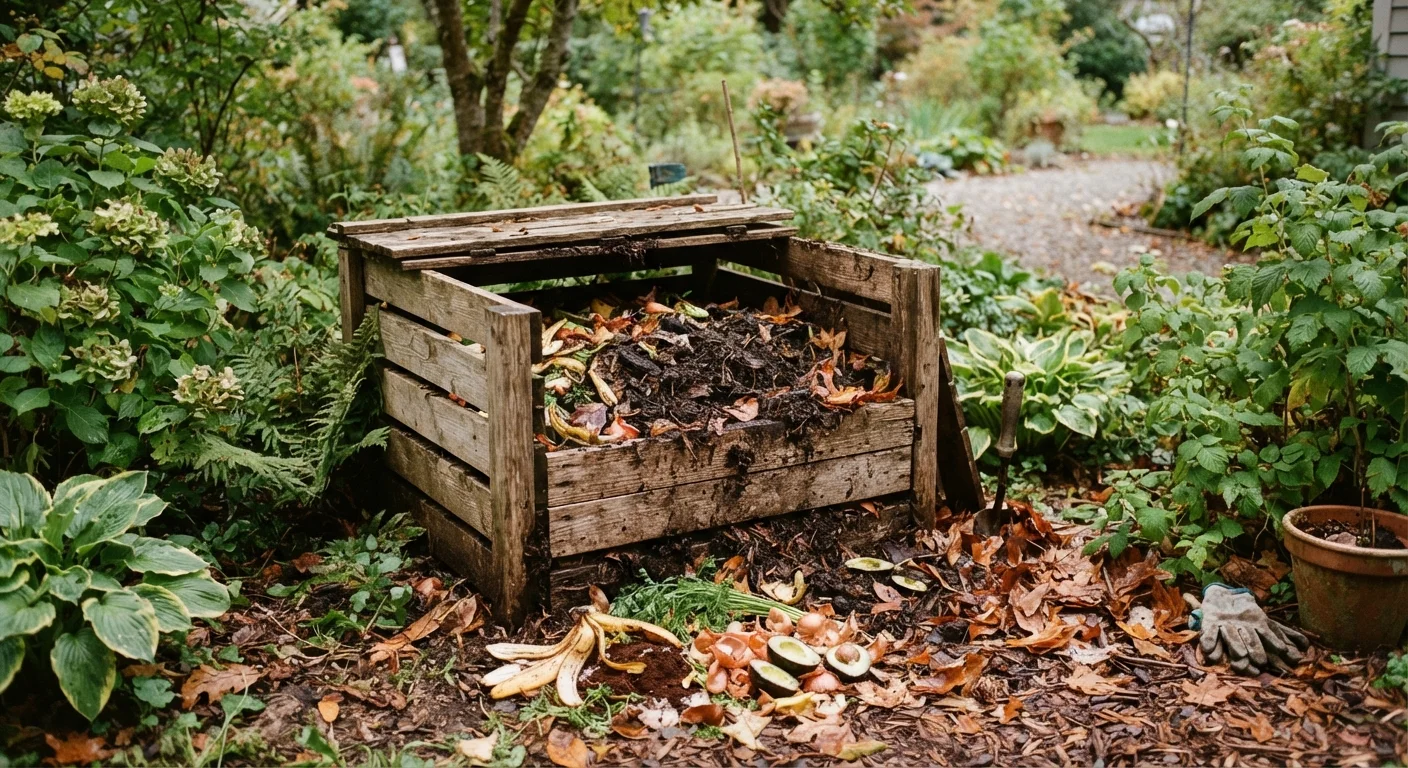
Photo: everyday-trends.com editorial
Key Takeaways
- A well-managed compost pile produces little to no noticeable odor.
- Composting does not require expensive equipment or a large yard to work effectively.
- Meat and dairy exclusions apply mainly to home piles, not because composting cannot break them down.
- Finished compost typically takes two to six months depending on conditions and method.
- Worms help but are not required for successful composting.
Why composting myths persist
Composting is one of the most practical ways to reduce household waste and improve garden soil. Yet many households never start because of misconceptions passed down through neighbors, online forums, or half-remembered advice. The fears tend to cluster around the same themes: smell, pests, difficulty, and time. Most of these concerns are either overstated or preventable with basic technique.
Understanding what composting actually involves makes it much less intimidating. The process is microbial decomposition, meaning bacteria, fungi, and other organisms break down organic material into a stable, nutrient-rich amendment called humus. Managing the conditions for those organisms is the whole job. Most mistakes come from misunderstanding what those organisms need.
Myth
Compost piles always smell bad, making them unsuitable for small yards or close neighbors.
Fact
A properly managed compost pile has an earthy smell similar to forest floor, not a foul odor.
Bad smells are a sign that something is off, not an inevitable feature. Anaerobic conditions, caused by too much moisture or compacted, oxygen-starved material, produce hydrogen sulfide and other compounds that smell strongly. Restoring airflow by turning the pile and adjusting the moisture level resolves this quickly. Burying fresh food scraps under existing material rather than leaving them on top also reduces any brief surface odor.
Myth
You need a large yard or rural property to compost at home.
Fact
Composting works in small urban spaces, including balconies and kitchen counters, using the right method.
Worm bins (vermicomposting) and bokashi fermentation systems operate in compact containers that fit under a sink or on a balcony. Vermicomposting uses red wiggler worms to process food scraps in a contained, odorless bin. Bokashi is an anaerobic fermentation method that can handle meat and dairy in a sealed bucket. Both methods are well documented by university extension programs as practical options for apartment dwellers.
Myth
Composting takes a year or more before you can use the material.
Fact
Finished compost is ready in two to six months under active management, and sometimes faster.
Timelines depend on pile size, temperature, moisture, and how often the pile is turned. A well-managed hot compost pile that reaches internal temperatures of 130 to 160 degrees Fahrenheit can produce finished material in as little as four to eight weeks. Passive piles that are rarely turned take longer, often six months to a year. Both approaches produce usable compost; the difference is how much attention goes in.
Myth
Compost piles attract rats and other pests.
Fact
Rodents are attracted by exposed food scraps, which proper pile management prevents.
Rats are drawn to food odors, not to compost itself. Burying food scraps in the center of the pile, avoiding meat and cooked foods in open bins, and using a bin with a solid bottom or hardware cloth lining are all effective deterrents. Closed tumblers with no ground contact are particularly resistant to rodent intrusion. The presence of pests in a compost pile generally signals that scraps are being left on the surface or that attractants like meat are being added to an open system.
Myth
All organic material can go into any home compost pile.
Fact
Open backyard piles work best without meat, dairy, oils, or diseased plant material.
These materials can decompose, but they do so slowly in a home pile, attract pests, and can produce odors before they break down. Municipal composting facilities use industrial-scale heat and aeration that overcomes these limitations. For home systems, sticking to fruit and vegetable scraps, coffee grounds, eggshells, dry leaves, cardboard, and grass clippings produces reliable results with fewer complications. Diseased plant material can also survive composting if pile temperatures do not get high enough to kill pathogens, so it is generally safer to discard it separately.
Myth
You have to add worms to a compost pile for it to work.
Fact
Worms are beneficial but not required; bacteria and fungi do most of the decomposition.
Earthworms that move through a traditional outdoor pile help aerate and process material, and they often appear on their own once conditions are right. The primary decomposers in a hot compost pile are thermophilic bacteria that thrive at elevated temperatures. Worm bins (vermicomposting) are a separate, specific method that deliberately uses worms as the main agent, and that system does require adding worms. A standard outdoor pile does not.
Practical steps that prevent common problems
Most composting problems trace back to the same handful of causes: too much moisture, too little airflow, or an imbalanced ratio of carbon-rich to nitrogen-rich materials. The general guidance from university cooperative extension programs is to aim for roughly 25 to 30 parts carbon material (dry leaves, cardboard, straw) for every 1 part nitrogen material (food scraps, grass clippings). This ratio supports active microbial work without producing excess ammonia or creating soggy anaerobic conditions.
Turning the pile every one to two weeks introduces oxygen, which accelerates breakdown and controls odor. A pile that is never turned will still decompose, just more slowly. Moisture should feel like a wrung-out sponge: damp but not dripping. If the pile smells like ammonia, it needs more carbon material. If it has stopped heating up entirely, it may need moisture or nitrogen material added.
Container choice matters less than conditions. Open bins, closed tumblers, and simple uncontained piles all work. Tumblers can speed the process and deter rodents, but they are not necessary. Many gardeners compost effectively using nothing more than a corner of the yard and a pitchfork.
What composting saves and produces
Finished compost has measurable value as a soil amendment. Adding it to garden beds improves drainage in clay-heavy soil, increases water retention in sandy soil, and provides a slow-release source of nutrients. Because the microbial process stabilizes nitrogen, phosphorus, and potassium, these nutrients become available to plants gradually rather than all at once, which reduces the risk of fertilizer burn.
24%
Food and yard waste share of U.S. landfill waste
According to the U.S. Environmental Protection Agency, food and yard trimmings together make up roughly 24 percent of the municipal solid waste stream sent to landfill.
130-160 F
Temperature range for active hot composting
University cooperative extension programs report that maintaining this internal pile temperature kills most common weed seeds and pathogens within a few days.
Households that compost also reduce the weight of material going to landfill. Food scraps make up a substantial portion of residential trash by weight, and landfill conditions prevent the aerobic decomposition that happens in a compost pile, producing methane instead. Home composting sidesteps that outcome without requiring any special infrastructure beyond a bin and a few minutes per week.
This article provides general educational information about composting practices and is not a substitute for guidance from your local cooperative extension service or a certified master gardener program, which can offer advice specific to your climate and soil conditions.
The content provided on our blog site traverses numerous categories, offering readers valuable and practical information. Readers can use the editorial team’s research and data to gain more insights into their topics of interest. However, they are requested not to treat the articles as conclusive. The website team cannot be held responsible for differences in data or inaccuracies found across other platforms. Please also note that the site might also miss out on various schemes and offers available that the readers may find more beneficial than the ones we cover.