
Raised Garden Beds vs. In-Ground Plots: A Practical Comparison

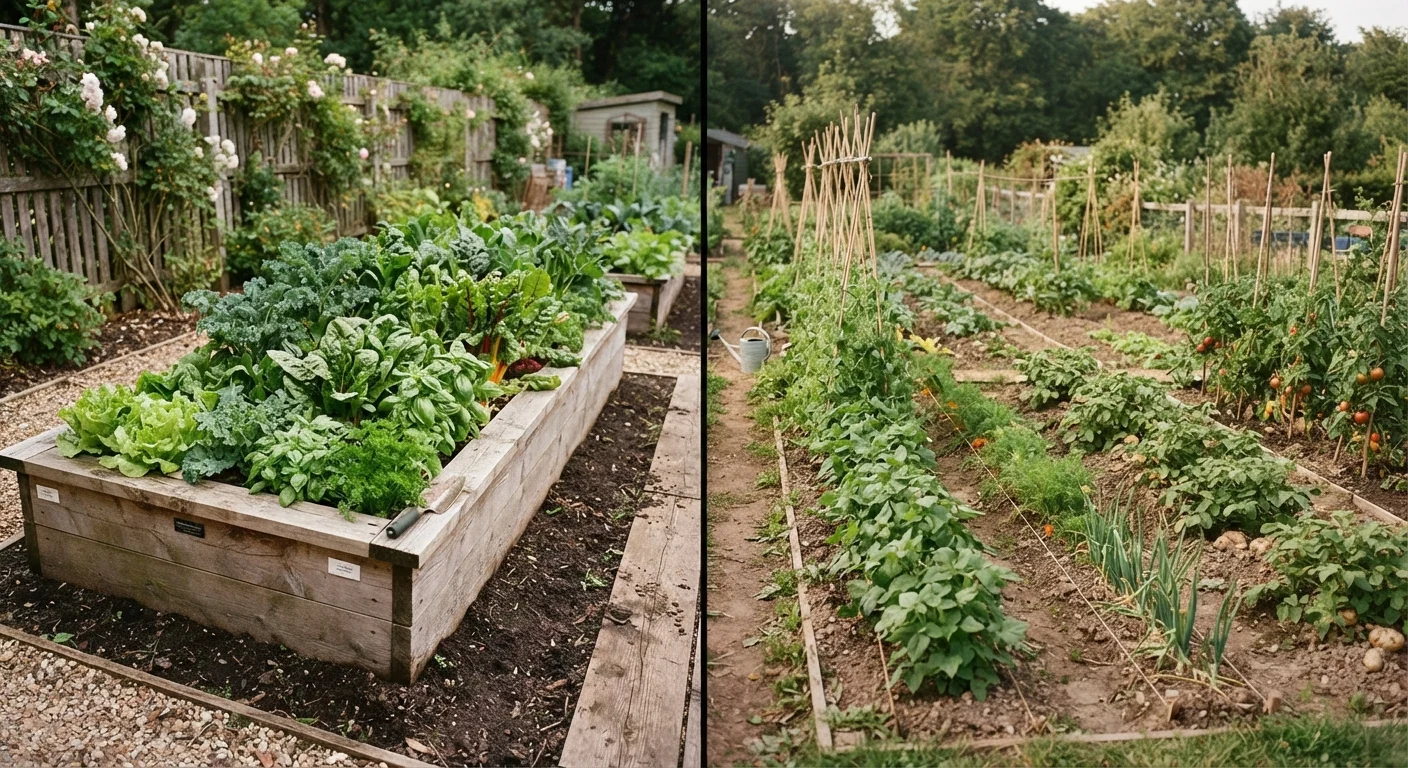
Photo: everyday-trends.com editorial
Key Takeaways
- Raised beds cost more to set up but let you control soil quality from the start.
- In-ground plots have almost no upfront cost but depend heavily on existing soil conditions.
- Raised beds warm up faster in spring, which can extend your growing season.
- In-ground plots support a wider range of deep-rooted crops with less soil volume to maintain.
- Your local soil test results should strongly influence which method makes more sense.
- Both approaches can produce healthy vegetables when managed with appropriate watering and feeding.
What each method actually involves
A raised garden bed is a frame, typically wood, metal, or composite, filled with imported soil placed on top of your existing ground or a hard surface. You control every component of the growing medium. An in-ground plot means preparing the native soil where you stand, amending it as needed, and planting directly into it.
Both methods grow the same crops, but the labor, cost, and maintenance patterns differ significantly. Raised beds front-load the investment. You spend more time and money building and filling them before the first seed goes in. In-ground plots front-load the soil preparation work, which may be lighter or heavier depending on what your yard already has.
For families thinking about small-space growing, see our guide to starting a vegetable garden in a small yard, which covers layout options and soil prep for compact areas.
Cost and setup
Building a standard 4-by-8-foot raised bed typically costs between $50 and $200 for materials, depending on what you use. Untreated pine is cheaper but degrades faster. Cedar resists rot longer. Metal galvanized beds sit in between on cost and last many years. On top of frame materials, you need soil: a mix of topsoil, compost, and sometimes perlite or vermiculite. Buying that in bulk or bags adds another $40 to $100 for a single bed.
In-ground planting costs little beyond a soil test (usually $15 to $30 through a cooperative extension service) and any amendments the test recommends, such as compost, lime, or sulfur. If your soil is in reasonable shape, total prep costs can stay under $30 for a comparable growing area. That gap in upfront expense is the central financial argument for in-ground plots.
| Criterion | Raised garden beds | In-ground plots |
|---|---|---|
| Upfront cost | $90 to $300+ per bed | Under $30 for most yards |
| Soil control | Full control over mix | Depends on native soil |
| Drainage | Fast; may need more watering | Varies by soil type |
| Season start | Warms faster in spring | Slower to warm |
| Accessibility | Easier for limited mobility | Requires kneeling or bending |
| Weed pressure | Lower initially | Higher from native seed bank |
| Depth for root crops | Limited by frame height | Unlimited natural depth |
| Long-term maintenance | Frame repair and soil top-up | Annual amendment and weeding |
Soil quality and drainage
Raised beds give you a clean slate. You choose a well-draining, nutrient-rich mix and start with soil that has no compaction, weed seed bank, or contamination. This matters most in urban and suburban yards where decades of foot traffic, lawn chemicals, or old construction debris have degraded the ground. Raised beds also drain faster after heavy rain, which most vegetables prefer.
In-ground soil that is already loamy and fertile needs minimal intervention. Adding a few inches of compost each season is often enough to sustain productivity. However, clay soils drain poorly and warm slowly in spring. Sandy soils drain too fast and hold few nutrients. Correcting either extreme takes repeated amendment over several growing seasons, not just one round of tilling.
Getting a soil test before committing to either approach will show you exactly what you are working with. Many county cooperative extension offices offer low-cost testing that tells you pH, nutrient levels, and organic matter content.
Maintenance over time
Raised beds require periodic topping-up because the soil compresses and decomposes over time. Plan to add a few inches of compost each spring. The frame itself will eventually need repair or replacement: wooden beds typically last 5 to 10 years depending on material and climate. Watering frequency is higher because raised bed soil dries out faster than in-ground soil, which matters for water costs and time.
In-ground plots need less supplemental watering in most climates because they connect to the moisture held deeper in the ground. Weeding pressure is generally higher, though, because the native seed bank is active. Tilling to control weeds can damage soil structure over time; many gardeners move toward mulch-heavy no-till methods to reduce both weeds and labor.
Both systems benefit from crop rotation, mulching, and seasonal composting. Neither is maintenance-free, and neither consistently outperforms the other once soil quality is equalized.
Which setup fits your situation
The right choice depends more on your specific yard than on any general rule. Start with a soil test. If the results show contamination, severe compaction, or extreme pH imbalance, raised beds make the path to a productive garden shorter. If your soil is workable, in-ground planting gives you more square footage for less money.
Space constraints also matter. Raised beds work on patios, rooftops, and other hard surfaces where in-ground planting is not an option. Families working with a small outdoor footprint will find more layout flexibility in raised beds, as covered in our small yard vegetable garden guide.
Budget is the other deciding factor. If the upfront cost of materials is a barrier, starting with an amended in-ground plot and adding a raised bed later is a practical sequence. Many gardeners run both systems side by side, using raised beds for heat-loving crops and in-ground space for larger or deep-rooted plants.
The content provided on our blog site traverses numerous categories, offering readers valuable and practical information. Readers can use the editorial team’s research and data to gain more insights into their topics of interest. However, they are requested not to treat the articles as conclusive. The website team cannot be held responsible for differences in data or inaccuracies found across other platforms. Please also note that the site might also miss out on various schemes and offers available that the readers may find more beneficial than the ones we cover.