
The Envelope Budget Method: A Practical Cash-Based Spending System

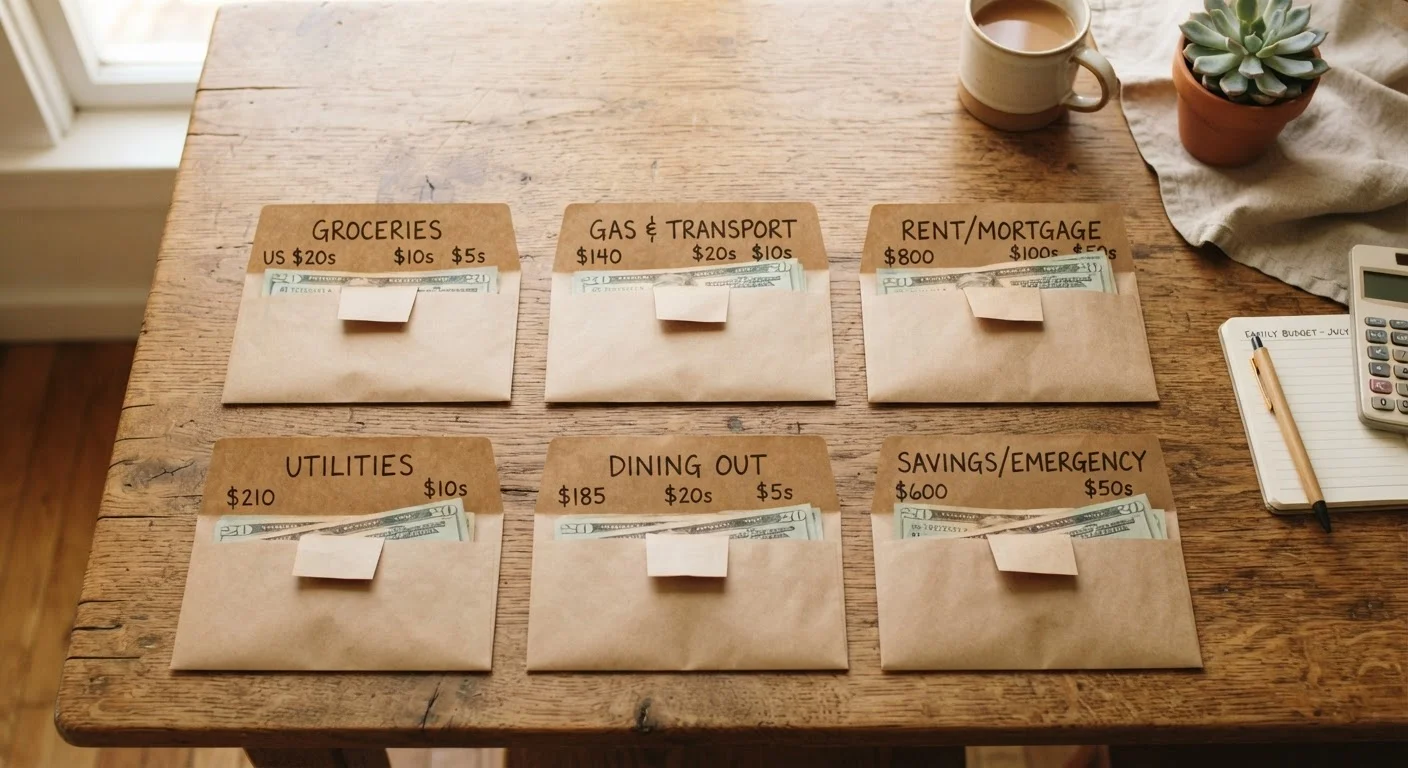
Photo: everyday-trends.com editorial
Key Takeaways
- Each envelope holds only the cash budgeted for one spending category, creating a firm monthly limit.
- When an envelope runs out, you stop spending in that category until the next budget period.
- The physical act of handing over cash makes spending feel more deliberate than swiping a card.
- Digital versions using budgeting apps can replicate the envelope structure without actual cash.
- The method works best for variable, discretionary spending rather than fixed bills paid by check or autopay.
How the envelope system works
At the start of a budget period, typically a month or a pay cycle, you withdraw a set amount of cash and sort it into labeled envelopes. Each envelope covers one spending category. Groceries might get $400, gas $150, dining out $100, and so on. The amounts reflect what you have decided to spend, not what you habitually spend.
Throughout the month you pay for purchases in each category using only the cash in its envelope. When the grocery envelope hits zero before the 30th, you either cook from what you already have or move cash from another envelope and accept the trade-off that comes with it. The constraint is physical, not theoretical.
Fixed expenses like rent, a car payment, or utilities are almost always handled outside the envelope system via autopay or check. The envelopes govern discretionary and variable spending, where most household budgets quietly leak. If your household keeps running short each month, the reasons are often behavioral rather than a simple math problem, and the envelope method targets those patterns directly.
Start with your two or three problem categories
Why cash creates different behavior than cards
Paying with physical bills produces a documented friction that card transactions do not. When you hand over a $20, you watch your remaining cash shrink. Tapping a card or phone produces no equivalent sensation. Behavioral research in consumer psychology has consistently found that cash payments feel more "painful" than electronic ones, which tends to reduce impulse purchases.
This is the mechanism the envelope method relies on. The spending limit is not an alert on your phone; it is the weight of what is left in the envelope. Families who have tried the method often describe the moment an envelope visibly thins as a natural brake on their spending decisions.
~$1,500
Average U.S. household monthly discretionary spending
According to the U.S. Bureau of Labor Statistics Consumer Expenditure Survey, American households spend roughly this amount monthly on food away from home, entertainment, apparel, and personal care combined.
18%
Typical gap between estimated and actual spending
Consumer finance researchers have found that people routinely underestimate their variable spending by roughly this margin when asked to recall rather than track it.
Setting up your envelopes
Start by listing every variable spending category in your household. Groceries, gas, household supplies, clothing, personal care, entertainment, dining out, and children's activities are typical starting points. For each category, set a monthly dollar amount based on recent bank or credit card statements rather than guessing.
Your grocery spending patterns are worth reviewing before you assign that envelope's amount, since food costs often shift more than families expect. Once you have totals for each category, confirm they fit within your monthly take-home income after fixed expenses are covered. If the math does not balance, trim discretionary categories before adjusting fixed ones.
Label each envelope clearly, fill them on payday, and store them somewhere consistent at home. A small accordion file or a sturdy box works well. Taking only the relevant envelope, or a portion of its cash, to the store is a habit worth building from the start.
Digital adaptations for modern spending
Cash-only budgeting creates friction with online shopping, automatic subscriptions, and card-only merchants. Several budgeting apps replicate the envelope structure digitally by letting you create category "buckets" and deduct each purchase manually or via bank sync. The visual depletion of a virtual envelope mimics the physical version closely enough that many households find it just as effective.
If you use the digital approach, a subscription audit is worth doing first. Recurring charges can drain a category envelope before you notice them. Our overview of which household subscriptions are worth keeping can help you identify what to cut or consolidate before you set your category amounts.
Hybrid approaches are common. Some families use physical cash for grocery and dining categories where overspending is most frequent, and digital tracking for everything else. There is no rule requiring a single format.
Who benefits most from this approach
The envelope method is particularly useful for households that have a budget on paper but routinely end the month confused about where the money went. The concreteness of the system removes ambiguity. It also suits people who are building a budget for the first time and need a simple structure before moving to more complex tools.
Households with irregular income can use the method with some adjustment. A conservative baseline income figure becomes the starting point, with any extra income added to envelopes or savings as it arrives. The guide on budgeting on an irregular income covers how to set that baseline.
Families working on building financial cushion alongside daily spending may find it useful to treat an emergency fund contribution as its own envelope category. A small, consistent amount set aside each month adds up. Our walkthrough of building an emergency fund on a limited income explains realistic starting amounts.
This article is for general informational purposes only and does not constitute personalized financial advice. Consult a licensed financial professional for guidance specific to your situation.
Frequently Asked Questions
The content provided on our blog site traverses numerous categories, offering readers valuable and practical information. Readers can use the editorial team’s research and data to gain more insights into their topics of interest. However, they are requested not to treat the articles as conclusive. The website team cannot be held responsible for differences in data or inaccuracies found across other platforms. Please also note that the site might also miss out on various schemes and offers available that the readers may find more beneficial than the ones we cover.