
Couponing in the Digital Age: What Has Changed and What Still Works

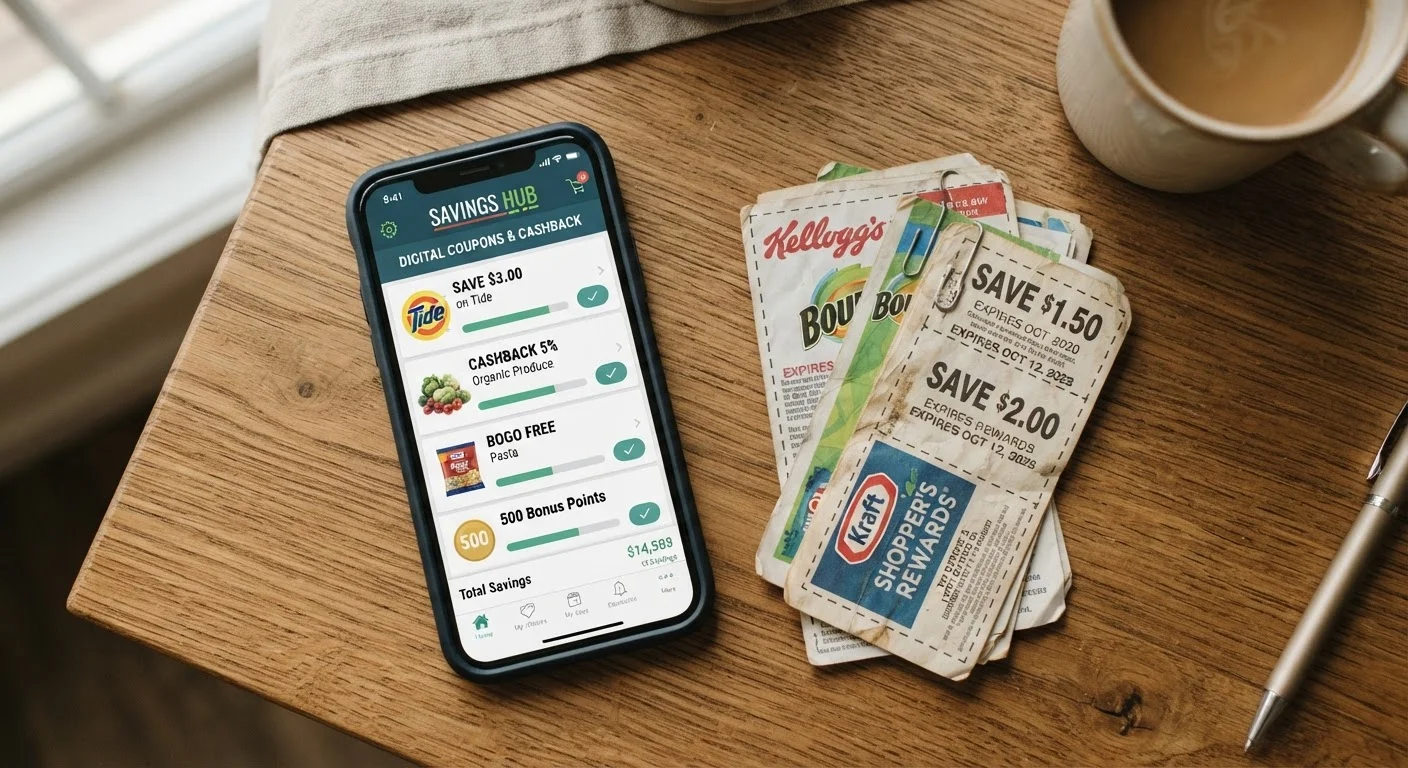
Photo: everyday-trends.com editorial
Key Takeaways
- Paper coupons have declined sharply; most discounts now live in store apps or browser extensions.
- Stacking multiple discount types (loyalty points, cashback, sale prices) remains one of the most effective saving strategies.
- Digital couponing can create overspending if shoppers buy items they would not otherwise purchase.
- Consistency and a short routine matter more than chasing every deal.
How couponing shifted from paper to digital
For most of the twentieth century, couponing meant scissors and a Sunday newspaper. Families built weekly rituals around clipping, organizing, and presenting physical vouchers at the register. That routine faded quickly once smartphones became common and grocery chains moved their promotional budgets into app-based loyalty programs.
Today, the majority of manufacturer and retailer discounts are delivered through store apps, email lists, or browser extensions that apply codes automatically at checkout. The shift was not just cosmetic. Digital systems let retailers track which offers actually drive purchases, so the discount landscape became more targeted and, in some cases, more personalized than the old broadsheet insert ever was.
For shoppers, this change brought genuine convenience alongside a new learning curve. You no longer need a coupon binder, but you do need accounts, a phone with sufficient storage, and a willingness to let stores collect purchase data in exchange for savings. Whether that trade-off works for your household is worth thinking through. See how food costs fit into the broader picture in our overview of grocery spending and family budgets.
What still works: the core logic of stacking
The single most durable principle in couponing, paper or digital, is stacking. Stacking means combining more than one type of discount on the same purchase: a store sale price, a manufacturer coupon, a loyalty reward, and a cashback credit applied together. Each layer is modest on its own. Combined, they can meaningfully reduce a routine grocery bill.
In a digital context, stacking might look like this: a store's app shows a clipped offer on a product that is already on sale, and a cashback app gives a percentage back after the receipt is scanned. None of those three steps is dramatic alone, but households that run this sequence consistently tend to see measurable results over a month.
Stick to your list when stacking discounts
The stacking principle also applies to non-grocery categories. Home goods, personal care items, and pet supplies often run loyalty-linked promotions that can be combined with browser extension codes at online checkout. The categories shift; the logic does not.
Where modern couponing can go wrong
Digital couponing introduces a few failure modes that paper couponing did not. The most common is buying something specifically because a discount exists for it, rather than because the household actually needs it. A 40 percent off offer on a product you would never have bought at full price is not savings; it is spending with an extra step.
A related problem is discount fragmentation. Savings are spread across multiple apps, browser extensions, and loyalty accounts, each with different expiration policies and payout thresholds. Shoppers who spread themselves too thin often find that rewards expire before they accumulate enough to withdraw, or that tracking the accounts takes more time than the payouts justify.
This pattern connects to a broader behavioral tendency that affects many budget-conscious households. Our article on why frugal families still end up overspending covers several of the structural reasons this happens even when people are paying close attention.
Building a practical digital couponing routine
A sustainable approach tends to be narrow rather than comprehensive. Picking two or three platforms that serve the stores you actually shop at regularly produces better results than maintaining a dozen accounts across retailers you visit once a year.
Before a grocery trip, a quick scan of the store app to clip available offers on items already on your list takes about five minutes. If your household uses a cashback app, scanning the receipt afterward adds another two or three minutes. That is the entire routine for most weeks. Subscriptions and recurring deliveries sometimes offer their own loyalty stacking opportunities, which our article on evaluating household subscriptions addresses in more detail.
The families who report the most consistent savings from digital couponing are not the ones running the most elaborate systems. They are the ones who built a short, repeatable habit around the stores they already use and stuck to their existing shopping list rather than letting discounts dictate what goes in the cart.
This article is for general informational purposes only. Individual savings will vary based on household spending patterns, store availability, and the terms of specific programs and apps.
Frequently Asked Questions
The content provided on our blog site traverses numerous categories, offering readers valuable and practical information. Readers can use the editorial team’s research and data to gain more insights into their topics of interest. However, they are requested not to treat the articles as conclusive. The website team cannot be held responsible for differences in data or inaccuracies found across other platforms. Please also note that the site might also miss out on various schemes and offers available that the readers may find more beneficial than the ones we cover.