
Debit Cards and Credit Cards: What Families Should Know About Each

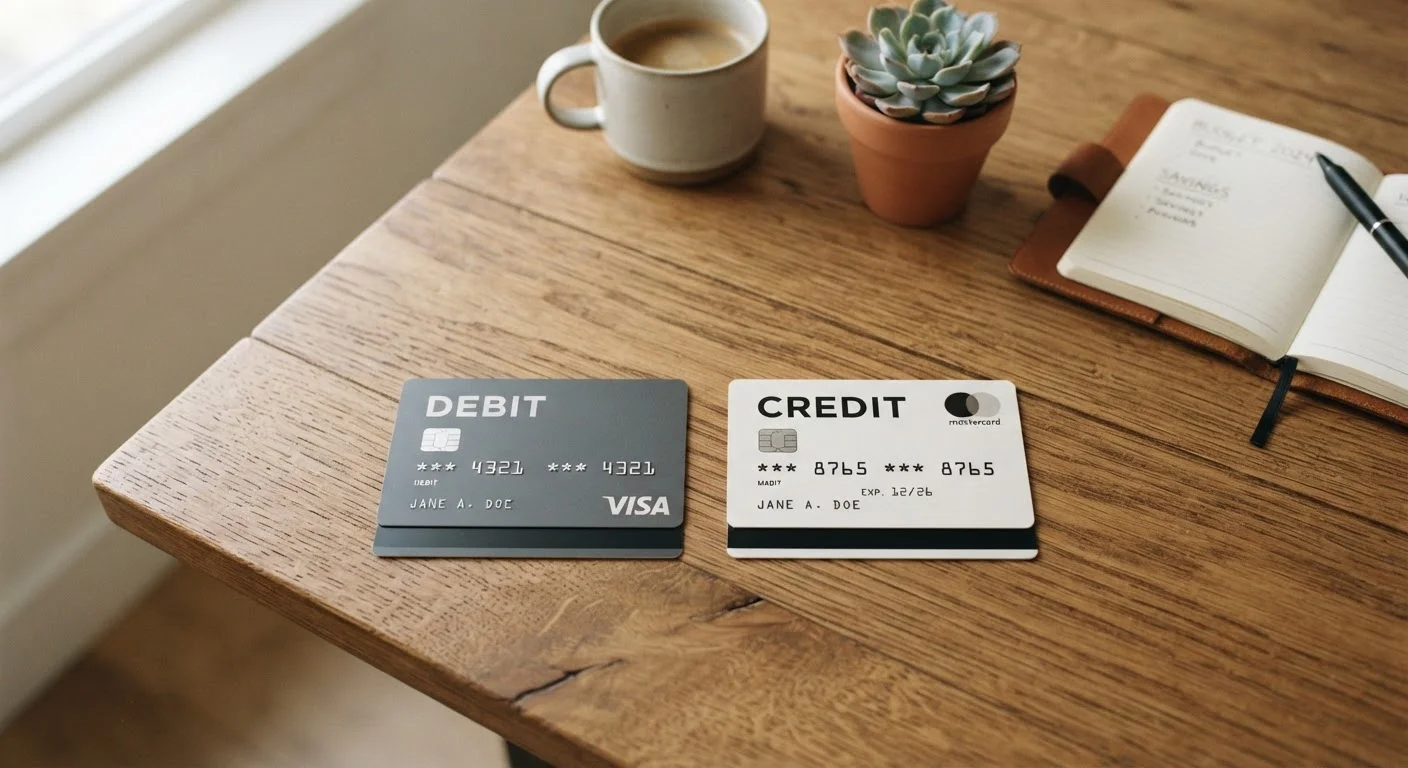
Photo: everyday-trends.com editorial
Key Takeaways
- Debit cards draw directly from your bank account; credit cards let you borrow up to a set limit.
- Credit cards generally carry stronger federal fraud protections than debit cards under U.S. law.
- Carrying a credit card balance from month to month triggers interest charges that add up quickly.
- Debit cards prevent debt accumulation but offer limited credit history benefits.
- Both card types work for everyday purchases, but the financial consequences of misuse differ significantly.
- Consult a qualified financial adviser for guidance tailored to your household's specific situation.
How each card actually works
A debit card is connected directly to a checking account. When you swipe or tap, the amount comes out of your balance in real time (or within one business day, depending on the transaction type). You cannot spend money you do not have, unless your bank permits overdrafts, which can trigger fees.
A credit card works differently. The card issuer extends a line of credit up to a set limit. You spend against that limit throughout the month, and then receive a statement. If you pay the full balance by the due date, you owe nothing extra. If you carry any portion forward, the issuer charges interest on it, typically at a high annual percentage rate. For more on how that compounding works in practice, see how minimum payments extend debt.
Both cards use the same payment networks, such as Visa or Mastercard, and are accepted almost everywhere. The difference lies entirely in whose money is being spent and what happens if something goes wrong.
Fraud protection: a meaningful gap
Federal law draws a clear line between the two card types when unauthorized charges appear.
For credit cards, the Fair Credit Billing Act limits your liability for fraudulent charges to $50, and most major issuers voluntarily drop that to zero. You dispute the charge, the issuer investigates, and your actual money sits untouched throughout the process.
For debit cards, the Electronic Fund Transfer Act offers protection too, but the timeline matters. If you report an unauthorized charge within two business days, your liability is capped at $50. Wait between two and 60 days, and the cap rises to $500. Beyond 60 days, you may bear the full loss. Critically, the money is already gone from your checking account while the dispute is resolved, which can affect rent payments, grocery spending, or any other bill drawing from that same account.
| Criterion | Debit Card | Credit Card |
|---|---|---|
| Funding source | Your existing bank balance | Issuer's credit line |
| Fraud liability (federal law) | $50 if reported within 2 days | Capped at $50 (often $0 by policy) |
| Risk of debt | None (overdraft aside) | Yes, if balance is not paid in full |
| Builds credit history | No | Yes, when used responsibly |
| Spending limit | Account balance | Assigned credit limit |
| Interest charges | None | Applies to any carried balance |
This does not mean debit cards are unsafe. Most banks extend voluntary zero-liability policies similar to credit cards. However, those are bank policies, not federal law, and they can change.
Spending control and the debt risk
The debit card's biggest practical advantage is its built-in spending limit. Your balance is the ceiling. That constraint can be useful for households managing a tight monthly budget or controlling grocery and daily spending.
Credit cards remove that ceiling, which is useful in a genuine emergency but can lead to balances that are difficult to pay off. Once a balance carries over, interest compounds monthly. The real costs of carrying a credit card balance include not just the interest rate but the effect on your credit utilization ratio, which influences your credit score.
A common middle-ground approach is to use a credit card for recurring, predictable expenses and pay the statement balance in full each month. That keeps interest at zero while building a credit history. It requires consistent discipline, though; a single month of paying less than the full balance starts the interest clock.
Credit building and long-term financial health
Debit cards do not appear on your credit report. Using one responsibly for years does nothing to improve your FICO score or VantageScore, because no creditor is reporting payment behavior to the three major credit bureaus.
Credit cards do report to the bureaus, typically each month. On-time payments and low utilization (generally, keeping your balance below 30% of your credit limit) are two of the factors that raise scores over time. A higher credit score can mean lower interest rates on a future car loan or mortgage, which translates into real dollar savings for a family.
This is why many financial educators suggest that households already managing their budget well consider a credit card for at least some purchases, paid in full monthly, specifically to build that file. It is general guidance, not a prescription: your own income, spending habits, and debt situation are factors a qualified financial adviser can weigh with you.
This article is for general informational purposes only and is not personalized financial, legal, or tax advice. Consult a licensed financial professional for guidance specific to your circumstances.
The content provided on our blog site traverses numerous categories, offering readers valuable and practical information. Readers can use the editorial team’s research and data to gain more insights into their topics of interest. However, they are requested not to treat the articles as conclusive. The website team cannot be held responsible for differences in data or inaccuracies found across other platforms. Please also note that the site might also miss out on various schemes and offers available that the readers may find more beneficial than the ones we cover.